Sell mineral rights in South Dakota
South Dakota mineral rights are a small market, and the numbers say so. The state produced 817 thousand barrels of crude oil in 2025 (EIA, 2025), and in 2025 its regulator counted 134 producing oil wells, 128 of them in Harding County in the far northwest corner, where the Williston Basin crosses the state line (South Dakota DANR, 2025). Fall River County in the southwest adds a handful of wells. If your mineral rights are in one of those two counties, buyers will take a look. When you sell mineral rights in South Dakota through this site, your request goes to up to three independent buyers who work in your county, and you pay nothing for the introduction.
Where buyers are most active in South Dakota
Harding County is the market. In 2025 it had 128 producing oil wells in 14 fields, run by 6 active operators, and produced 788,898 barrels of oil from the Red River Formation; 77.6 percent of that oil came through enhanced recovery units, and the average producing well was 21 years old (South Dakota DANR, 2025). The same county holds the state's only gas production: 45 wells in one field produced 117,655 thousand cubic feet of marketed gas from the Shannon Sandstone, from wells averaging 41 years old (South Dakota DANR, 2025). Oil was first found in Harding County in 1954 (South Dakota Geological Survey).
Fall River County, on the Denver-Julesburg Basin side of the Black Hills, had 6 producing oil wells in 2 fields and produced 29,024 barrels from the Minnelusa Formation in 2025 (South Dakota DANR, 2025). Custer County, which once had a few wells, reported no production in 2025. Nobody drilled a new well anywhere in the state in 2025 and no permits were issued (South Dakota DANR, 2025). That tells you what South Dakota mineral rights buyers are paying for: royalty from old, steady wells, not drilling to come. Mineral rights with no well on them are hard to sell here.
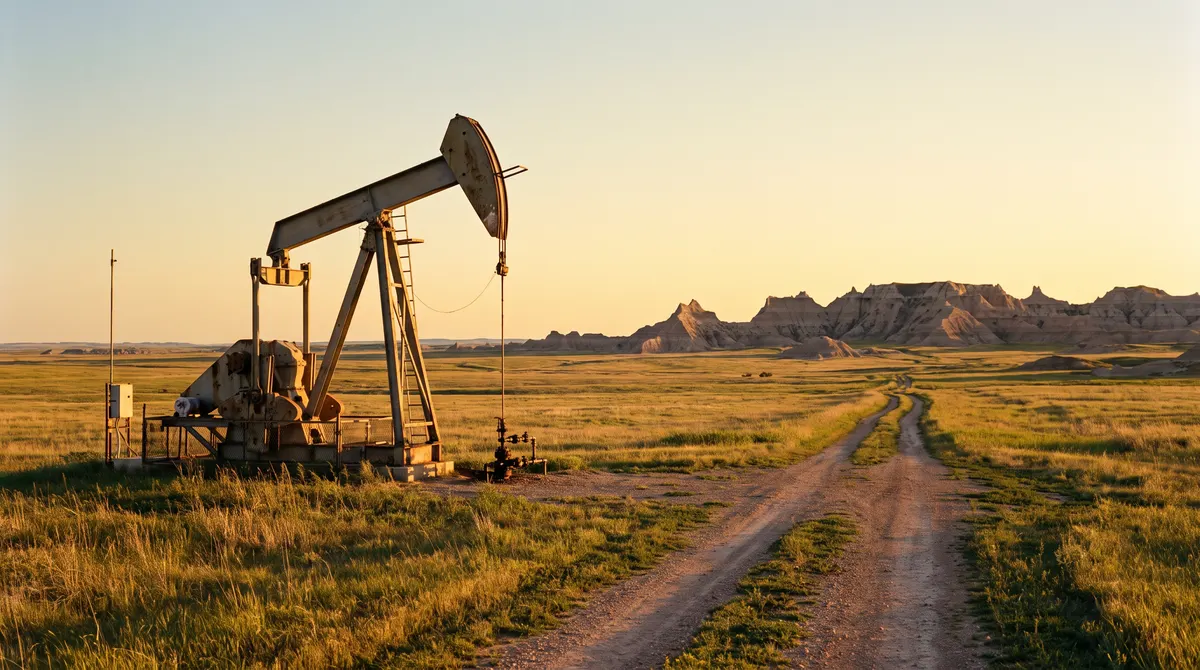
What buyers check before a South Dakota mineral rights offer
Buyers start with the state's records. Oil and gas is regulated by the Minerals and Mining Program of the South Dakota Department of Agriculture and Natural Resources, with the Board of Minerals and Environment deciding contested spacing, pooling and unitization orders and the program issuing drilling permits (South Dakota DANR). Monthly production reports by well go back to 1950 in the program's downloadable spreadsheets, and the South Dakota Geological Survey's interactive data map shows well-level production and recent permits near any property (South Dakota DANR).
A South Dakota mineral rights offer is built from the unit or lease your tract is in, the royalty fraction, and what the operator has paid over the past year or two. Most Harding County oil comes from enhanced recovery units, so a buyer also reads the unit agreement to see your tract's share of unit production. Mineral rights inside a unit that is still being waterflooded hold value longer than a single old well that is near the end of its life.
Taxes the operator pays also shape the price. South Dakota levies an energy minerals severance tax on oil and gas under SDCL chapter 10-39A, with half of the money returned to the county where the minerals were severed, and a conservation tax of 2.4 mills on the taxable value of energy minerals severed and saved, which the operator pays and may not pass on to the mineral owner (South Dakota session law, 2021). Buyers value mineral rights on the royalty you actually receive.
South Dakota mineral rights records and ownership
Mineral deeds, leases and plats are recorded with the register of deeds in the county where the land lies; the register's office keeps deeds, mortgages, leases and plats as the county's permanent land record (Marshall County Register of Deeds). For Harding County mineral rights, that is the Harding County register of deeds in Buffalo. Before you sell, pull the deed that gave you the mineral rights and any later lease, and check that each is of record.
Many South Dakota mineral rights were split from the surface decades ago and passed through estates, so the chain of title often has gaps: an unprobated estate, a misspelled name, or a deed that reserved half the minerals to a seller whose heirs are unknown. A buyer's title check will find these, and most will help cure a simple gap, but a tract with a real dispute sells for less until it is settled. An oil and gas attorney can tell you what a particular gap will cost.
Selling South Dakota mineral rights: taxes and closing
South Dakota's Department of Revenue lists the taxes it administers for individuals, from sales and use tax to property tax, and an individual income tax is not among them (South Dakota Department of Revenue). A sale of mineral rights is still a federal taxable event, so ask a tax professional how a lump sum compares with continued royalty income.
Closing is straightforward: the buyer prepares a mineral deed, you sign it before a notary, and payment is made when the deed is recorded with the register of deeds. Because the market for mineral rights is small, you may hear from fewer than three buyers, which makes it more important, not less, to compare the ones you do hear from. Owners who sell mineral rights in South Dakota through this site see every offer before deciding, and no offer has to be accepted.
How to get offers for South Dakota mineral rights
Tell us your county and what you own. We send your request to up to 3 buyers who purchase in that part of South Dakota. They review the public records and contact you with offers, and you choose whether to sell, sell part, or keep.
South Dakota mineral rights sources
- South Dakota DANR: Minerals and Mining Program, Oil and Gas
- South Dakota DANR: 2025 oil and gas statistics (PDF)
- South Dakota Geological Survey: frequently asked questions
- US Department of Energy: South Dakota oil and gas state profile (2022)
- South Dakota Legislature: 2021 session law amending the severance and conservation taxes
- EIA: crude oil production by state
Last reviewed October 13, 2026. This page is general information, not legal or tax advice. Facts come from the official sources listed above; confirm anything that matters to your sale with a qualified professional.
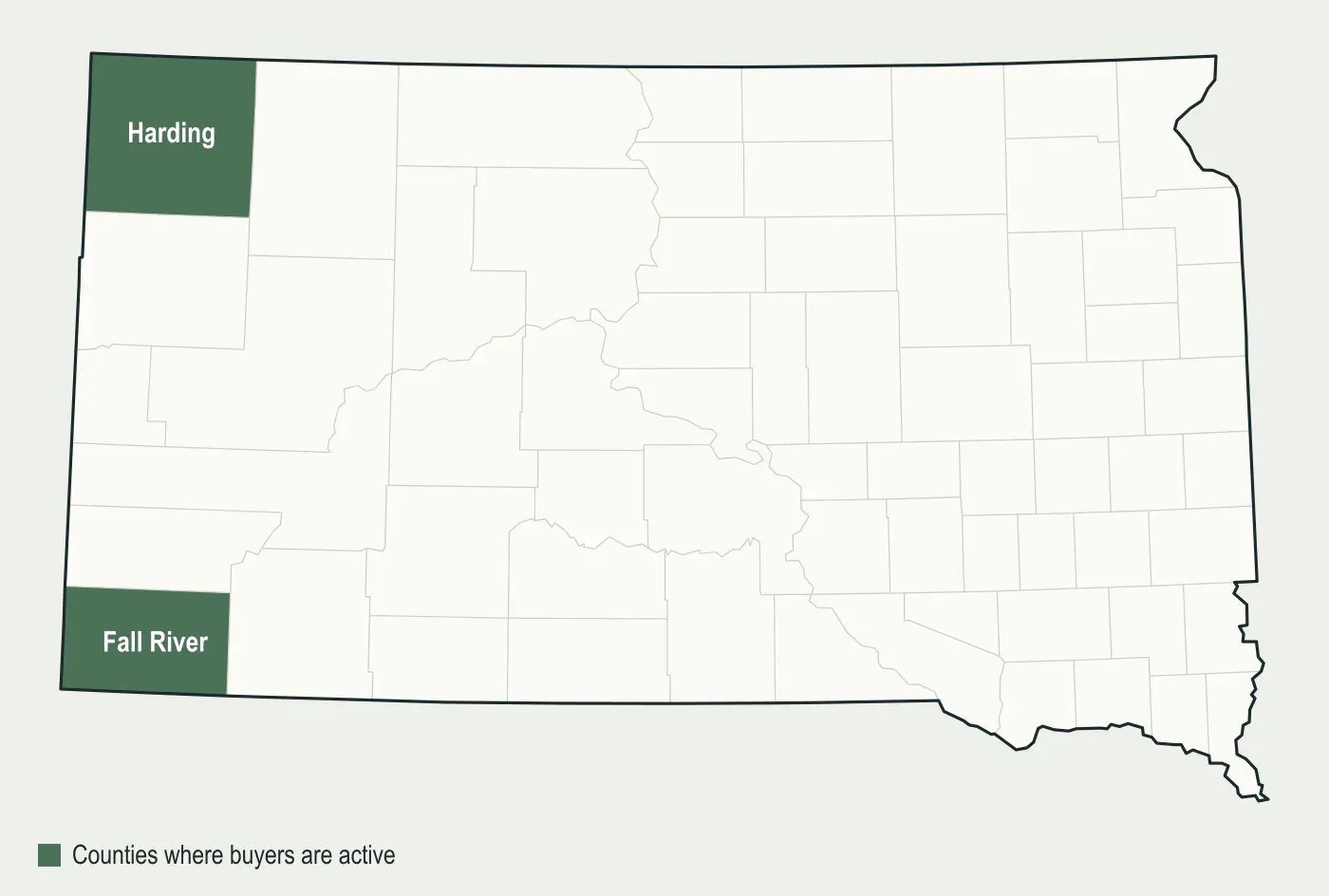
Where South Dakota mineral rights buyers are active
Buyers concentrate on the counties below, where drilling is heaviest. Minerals elsewhere in South Dakota can still sell; send the details and we'll tell you if a buyer covers your area.
What you can sell in South Dakota
- Mineral rightsProducing or non-producing minerals, all or part of your interest.
- Royalty interestsWant to sell oil and gas royalties? See how buyers value a royalty interest or NPRI, what to have ready, and get offers from up to 3 buyers in your county.
- Overriding royalties (ORRI)Own an overriding royalty interest? Learn how ORRIs work, why lease expiry changes the price, which documents buyers need, and how to get offers.
- Inherited mineral rightsInherited mineral rights or oil and gas royalties? Learn how to get title in your name, why royalties go into suspense, and how to get buyer offers.
South Dakota mineral rights questions
Are South Dakota mineral rights worth anything outside Harding County?
Rarely. In 2025 every producing oil well in the state was in Harding or Fall River County, and no new wells were drilled anywhere. Mineral rights elsewhere in South Dakota have no royalty income and no drilling nearby, so most buyers will pass. In Harding County, mineral rights under a producing unit have a real price.
Who regulates oil and gas in South Dakota?
The Minerals and Mining Program of the South Dakota Department of Agriculture and Natural Resources, with the Board of Minerals and Environment hearing contested cases. Its production spreadsheets and the Geological Survey's data map are where buyers check the wells on your mineral rights.
How do I sell mineral rights in South Dakota through this site?
Fill in the form with your county and what you own, such as a royalty in a Harding County unit or inherited mineral rights. Up to three independent buyers active in that county receive the request and can each send an offer. You pay nothing, and you can turn every offer down.
Get offers for your South Dakota mineral rights
Free to you, no obligation. Your details go only to buyers active in your county.
Other states
Sell mineral rights in Texas, Sell mineral rights in Oklahoma, Sell mineral rights in New Mexico, Sell mineral rights in North Dakota, Sell mineral rights in Ohio, Sell mineral rights in Pennsylvania, Sell mineral rights in West Virginia, Sell mineral rights in Colorado, Sell mineral rights in Louisiana, Sell mineral rights in Wyoming, Sell mineral rights in Alabama, Sell mineral rights in Alaska, Sell mineral rights in Arkansas, Sell mineral rights in California, Sell mineral rights in Florida, Sell mineral rights in Illinois, Sell mineral rights in Indiana, Sell mineral rights in Kansas, Sell mineral rights in Kentucky, Sell mineral rights in Michigan, Sell mineral rights in Mississippi, Sell mineral rights in Montana, Sell mineral rights in Nebraska, Sell mineral rights in New York, Sell mineral rights in Tennessee, Sell mineral rights in Utah, Sell mineral rights in Virginia