Sell mineral rights in Alabama
Alabama has two very different mineral markets. In the northwest, the Black Warrior Basin produces coalbed methane, which is natural gas drawn from coal seams, and most of the state's onshore gas comes from those wells (EIA, 2025). In the southwest, the Gulf Coast Salt Basin holds the conventional oil fields of southwest Alabama. Both are in long decline, so Alabama mineral rights are priced on what the wells still pay rather than on new drilling. If you plan to sell mineral rights in Alabama, the county you are in tells a buyer most of what they need to know.
Where Alabama mineral rights buyers are most active
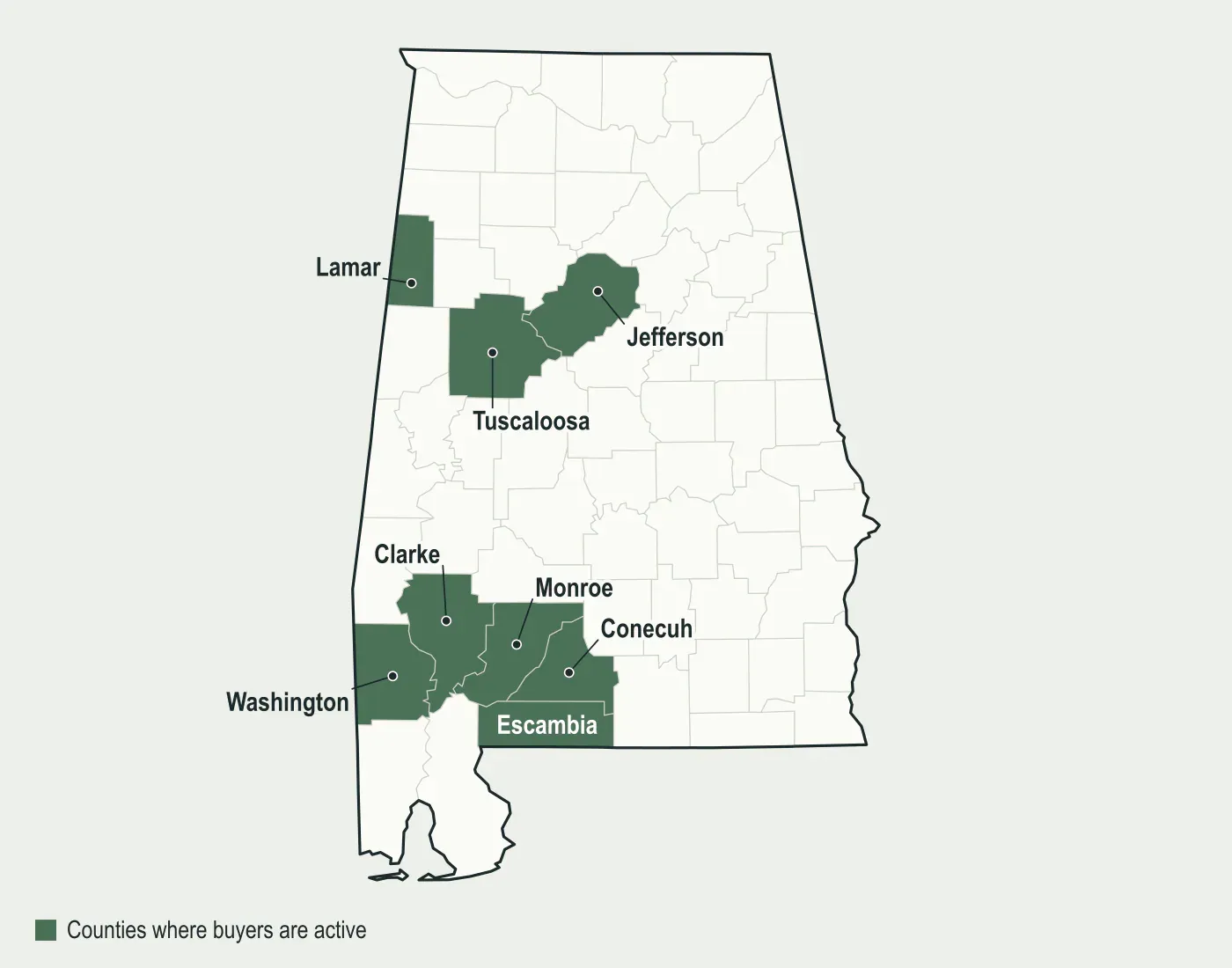
Natural gas and some oil come from the Black Warrior Basin of northwestern Alabama and the Gulf Coast Salt Basin of southwestern Alabama, with limited production in the Appalachian fold and fault belt that runs diagonally across the state (U.S. Department of Energy, 2022). The State Oil and Gas Board's weekly well activity reports from 2023 list active wells and new permits in Tuscaloosa, Jefferson, Conecuh, Monroe, Clarke, Lamar, Pickens and Washington counties, including the Oak Grove degasification field in Jefferson County and the White Oak Creek field in Tuscaloosa County (State Oil and Gas Board of Alabama, 2023). Escambia County appears in earlier reports. Those are the counties where Alabama mineral rights draw the most offers.
Coalbed methane wells are primarily in the Black Warrior Basin, and three-fifths of Alabama's gas comes from onshore wells, most of it coalbed methane (EIA, 2025). These wells pump water first and gas second, so royalties on those mineral rights are modest and steady. Conventional oil in the southwest is older and smaller: oil was found near Gilbertown in the mid-1940s, production peaked at about 22 million barrels in 1980, has fallen every year since 2013, and dropped to 3.4 million barrels in 2024, the lowest since 1956 (EIA, 2025). Alabama also produces gas offshore in state waters, including Mobile Bay (EIA, 2025).
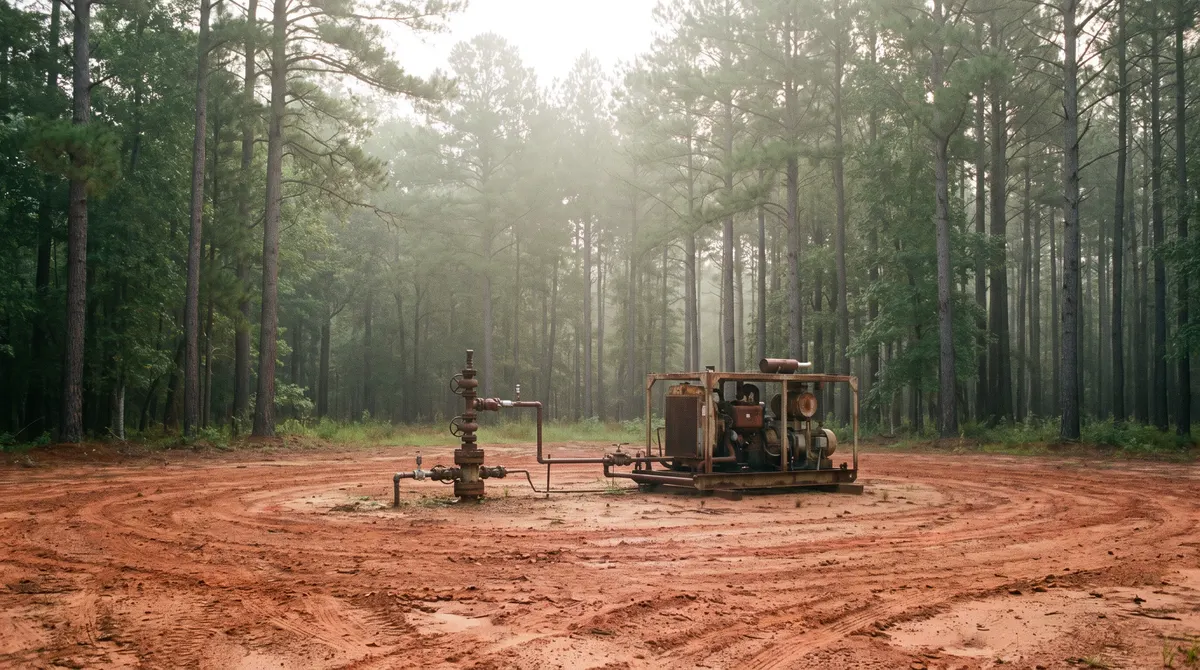
What buyers check before an Alabama mineral rights offer
Mineral rights buyers pull your wells from the State Oil and Gas Board of Alabama, which regulates drilling and production and publishes a well database searchable by county, operator, field, well name and API number, along with field production and the weekly activity reports. A buyer will match the well names and decimal interest on your royalty statement to those records before pricing Alabama mineral rights.
For coalbed methane royalties, the buyer looks at the age of the field, the gas price and the water handling costs that make operators plug wells early. For conventional oil in Conecuh, Monroe or Escambia counties, the buyer looks at the field's remaining life and whether the operator is still drilling. For non-producing Alabama mineral rights, the buyer checks distance to active units and whether any lease is in force. Offshore mineral rights in the Mobile Bay gas fields are a separate, specialized market.
Alabama mineral rights records and ownership
Deeds, mineral deeds and oil and gas leases are recorded with the probate judge's office in the county where the land lies. In Mobile County, for example, the Recording Office of the Mobile County Probate Court records deeds, mortgages and liens, and offers electronic recording through approved vendors. Buyers run title through that probate recording index, so having your name and current address on a recorded instrument is what makes you findable when an operator or buyer looks for the owner of Alabama mineral rights.
If you inherited an interest, record the probate order or an affidavit of heirship in the county probate office before you ask for offers. An oil and gas attorney can confirm which mineral rights you own, especially where the coal, the coalbed methane and the conventional oil and gas under one tract may be held by different owners.
Selling Alabama mineral rights: taxes and closing
Royalty checks in Alabama already carry severance tax. The state's oil and gas privilege tax is 8 percent of gross value for older wells, 6 percent for wells permitted on or after July 1, 1988, and 4 percent for small wells producing 25 barrels or 200 thousand cubic feet a day or less, plus a separate production tax of 2 percent on most output (Alabama Department of Revenue). Alabama also has a graduated individual income tax with rates from 2 percent to 5 percent (Alabama Department of Revenue), so the gain when you sell is taxed by the state as well as federally. Ask a tax professional about your basis in inherited mineral rights before closing.
To sell mineral rights in Alabama, gather the recorded deed or probate record, any lease and the last 12 months of royalty statements. Buyers verify the wells against Oil and Gas Board records. Closing is a mineral deed recorded with the county probate office, payment, and a transfer order so the operator pays the new owner. Compare several written mineral rights offers against a year of royalty income before you decide.
How to get offers for Alabama mineral rights
Tell us your county and what you own. We send your request to up to 3 buyers who purchase in that part of Alabama. They review the public records and contact you with offers, and you choose whether to sell, sell part, or keep.
Alabama mineral rights sources
- U.S. Energy Information Administration, Alabama State Profile and Energy Estimates (updated December 2025)
- State Oil and Gas Board of Alabama, well database and activity reports
- State Oil and Gas Board of Alabama, Well Activity Report, March 13, 2023
- Alabama Department of Revenue, Severance taxes administered and tax rates
- Alabama Department of Revenue, Individual income tax
- U.S. Department of Energy, Alabama natural gas flaring and venting state profile (2022)
Last reviewed October 13, 2026. This page is general information, not legal or tax advice. Facts come from the official sources listed above; confirm anything that matters to your sale with a qualified professional.
Where Alabama mineral rights buyers are active
Buyers concentrate on the counties below, where drilling is heaviest. Minerals elsewhere in Alabama can still sell; send the details and we'll tell you if a buyer covers your area.
What you can sell in Alabama
- Mineral rightsProducing or non-producing minerals, all or part of your interest.
- Royalty interestsWant to sell oil and gas royalties? See how buyers value a royalty interest or NPRI, what to have ready, and get offers from up to 3 buyers in your county.
- Overriding royalties (ORRI)Own an overriding royalty interest? Learn how ORRIs work, why lease expiry changes the price, which documents buyers need, and how to get offers.
- Inherited mineral rightsInherited mineral rights or oil and gas royalties? Learn how to get title in your name, why royalties go into suspense, and how to get buyer offers.
Alabama mineral rights questions
Are coalbed methane royalties in Alabama worth selling?
They can be. Black Warrior Basin coalbed methane wells pay modest, steady royalties, and mineral rights buyers offer a multiple of that income. Alabama mineral rights under older degasification fields carry the risk that the operator plugs wells as water costs rise, which is why offers vary. Several offers side by side show the real range.
Do I need to prove who owns the coal, the gas and the oil under my land?
Often yes. In Alabama's coal counties the coal, coalbed methane and conventional oil and gas can be held by different owners. Buyers check the county probate records to see which estate you hold before they price your mineral rights, and an attorney's title opinion settles any doubt.
How do I sell mineral rights in Alabama through this site?
Send one request with your county, the field or well name if you know it, and a recent royalty statement. Up to three independent buyers active in your county make offers, and you choose one or keep your mineral rights. Owners pay nothing; the buyers pay for the introduction.
Get offers for your Alabama mineral rights
Free to you, no obligation. Your details go only to buyers active in your county.
Other states
Sell mineral rights in Texas, Sell mineral rights in Oklahoma, Sell mineral rights in New Mexico, Sell mineral rights in North Dakota, Sell mineral rights in Ohio, Sell mineral rights in Pennsylvania, Sell mineral rights in West Virginia, Sell mineral rights in Colorado, Sell mineral rights in Louisiana, Sell mineral rights in Wyoming, Sell mineral rights in Alaska, Sell mineral rights in Arkansas, Sell mineral rights in California, Sell mineral rights in Florida, Sell mineral rights in Illinois, Sell mineral rights in Indiana, Sell mineral rights in Kansas, Sell mineral rights in Kentucky, Sell mineral rights in Michigan, Sell mineral rights in Mississippi, Sell mineral rights in Montana, Sell mineral rights in Nebraska, Sell mineral rights in New York, Sell mineral rights in South Dakota, Sell mineral rights in Tennessee, Sell mineral rights in Utah, Sell mineral rights in Virginia