Sell mineral rights in Kentucky
Kentucky mineral rights sit in two different oil and gas regions. The eastern coal field, part of the Appalachian Basin, produces mostly natural gas. The western coal field and south-central Kentucky, on the Illinois Basin side, produce mostly oil (Kentucky Geological Survey). Production is small next to Texas or Pennsylvania, but buyers still want royalty income from the active counties. When you sell mineral rights in Kentucky through this site, your request goes to up to three independent buyers who work in your county, and you pay nothing.
Where buyers are most active in Kentucky
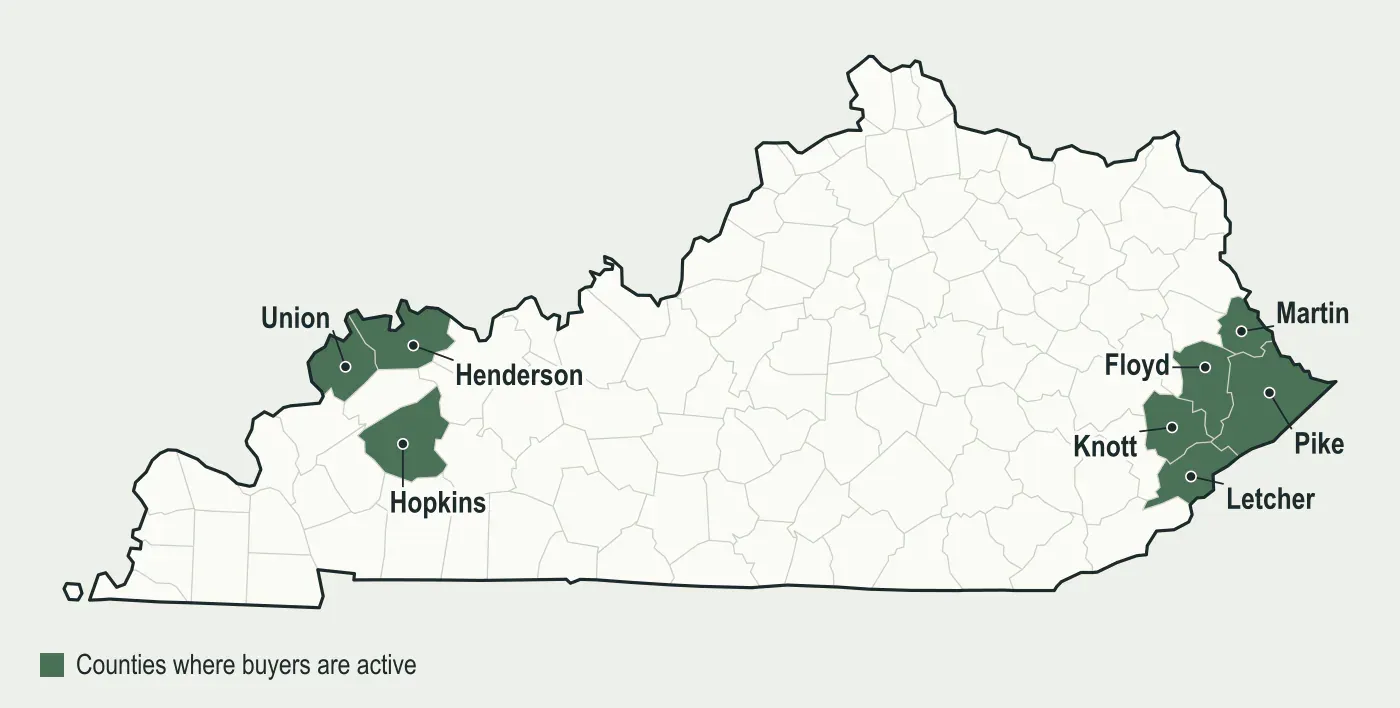
Eastern Kentucky gas counties draw the most interest. Pike County has long been the state's leading gas county: it produced 29.8 billion cubic feet of natural gas in 1997, the latest year in the Kentucky Geological Survey's county summary (KGS). Floyd, Knott, Letcher and Martin counties sit in the same gas-producing part of the Appalachian Basin. Wells here are mostly older vertical gas wells, so Kentucky mineral rights in this region are valued on steady royalty checks rather than on new drilling.
Western Kentucky is oil country. Union County produced 425 thousand barrels of oil in 1997 and led the state (KGS), and Henderson and Hopkins counties are in the same Illinois Basin oil area. Statewide, Kentucky produced 1,734 thousand barrels of crude oil in 2025 and 58,816 million cubic feet of natural gas in 2024 (EIA). Mineral rights under producing leases in these eight counties sell; mineral rights with no wells and no permits nearby get few offers.
What buyers check before a Kentucky mineral rights offer
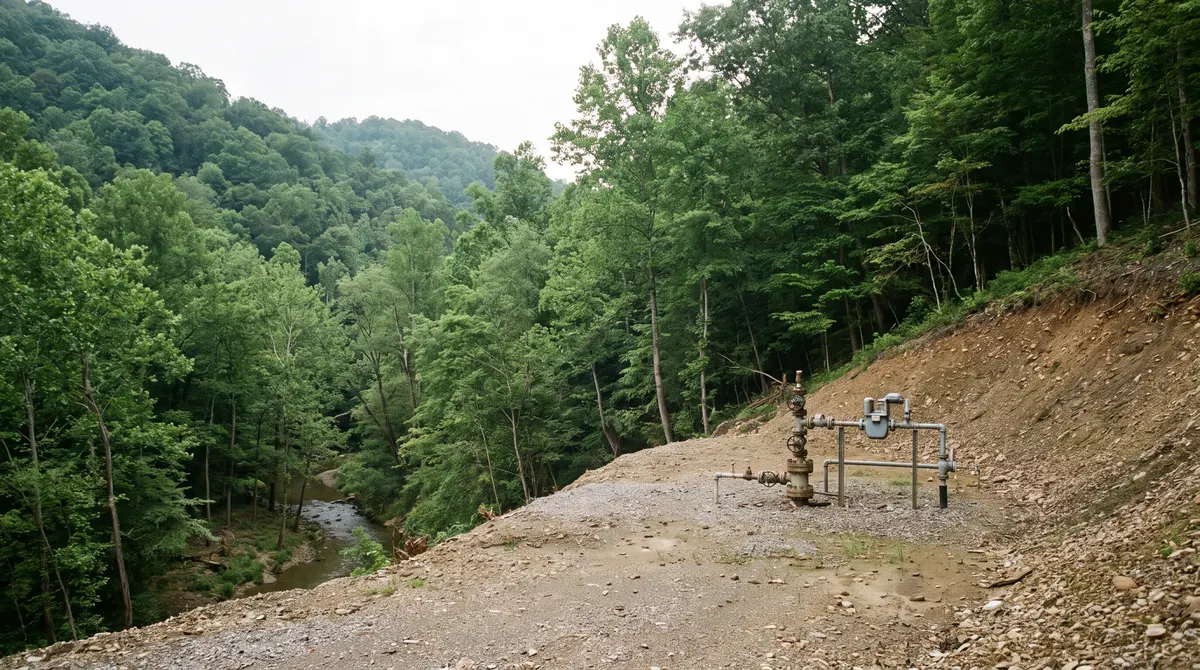
Buyers start with the well records. The Kentucky Division of Oil and Gas, part of the Energy and Environment Cabinet, regulates drilling and keeps a well history for each well, with 136,286 wells stored online (Division of Oil and Gas). The Division points searchers to the Kentucky Geological Survey's KY Geode database, which holds well logs, scanned records, completion reports and production data. KGS also offers a county-level production tool built from severance tax data, so a buyer can see how a county's output has moved year by year.
A buyer will match your mineral rights to specific wells, check who operates them and read the production history. A Kentucky mineral rights offer on a producing tract is based mostly on what the wells have paid over the past year or two and how fast that income is falling. Your royalty check stub shows your decimal interest and the deductions taken. New drilling permits nearby raise interest; the Division publishes weekly permit lists with the operator, lease name and location, and every new well needs a $350 permit application before drilling (Division of Oil and Gas).
Buyers also read the lease: the royalty fraction, whether it is held by production and what deductions it allows. Where gas wells are old and gathering costs high, deductions shrink the check, and buyers price mineral rights on the net amount you receive.
Kentucky mineral rights records, coal and severed minerals
Many Kentucky mineral rights were severed from the surface generations ago, and the same deed often covers coal as well as oil and gas. The Division of Oil and Gas says part of its job is protecting mineral owners' rights and minable coal seams when wells are drilled (Division of Oil and Gas). Before you sell, read your deed and any later conveyances to see exactly which mineral rights you own and whether an earlier owner kept any of them.
Kentucky taxes unmined minerals as real property. Under KRS 132.820, the Department of Revenue values unmined coal, oil, gas and other mineral interests that are owned or leased separately from the surface as a distinct interest in real property, at no more than fair market value in place (Kentucky Department of Revenue). Coal goes to the Unmined Coal Property Tax Branch; oil, gas and other non-coal minerals to the Natural Resources Property Tax Branch. If you pay this tax on mineral rights that earn little, that cost belongs in your decision to sell or keep them.
Selling Kentucky mineral rights: taxes, leases and closing
Kentucky has a state income tax at a flat rate of 4 percent (Kentucky Department of Revenue), so a sale of Kentucky mineral rights can be taxed by both the federal government and the state. Ask a tax professional how a lump sum compares with years of taxed royalty income in your case.
Severance taxes come off the top before royalties are paid. Kentucky's natural resources severance and processing tax is 4.5 percent of gross value on natural gas and natural gas liquids; crude oil is taxed under a separate statute, KRS 137 (Office of State Budget Director tax expenditure analysis, 2008-2010; Kentucky Department of Revenue). Buyers value mineral rights on the net royalty, so these taxes are already in their offers.
Closing is simple once title is clear. The buyer prepares a mineral deed for the county where the minerals lie, you sign it before a notary, and payment is made when the deed is recorded. If you inherited the mineral rights, expect a request for the probate record or the chain of deeds that connects you to the last owner of record. Owners who use this site compare up to three offers, and none has to be accepted.
How to get offers for Kentucky mineral rights
Tell us your county and what you own. We send your request to up to 3 buyers who purchase in that part of Kentucky. They review the public records and contact you with offers, and you choose whether to sell, sell part, or keep.
Kentucky mineral rights sources
- Kentucky Division of Oil and Gas: about the division
- Kentucky Division of Oil and Gas: online services and well records search
- Kentucky Geological Survey: oil and gas data and production tools
- Kentucky Geological Survey: leading counties in oil and gas production
- Kentucky Department of Revenue: natural resources property tax (KRS 132.820)
- EIA: crude oil production by state
Last reviewed October 13, 2026. This page is general information, not legal or tax advice. Facts come from the official sources listed above; confirm anything that matters to your sale with a qualified professional.
Where Kentucky mineral rights buyers are active
Buyers concentrate on the counties below, where drilling is heaviest. Minerals elsewhere in Kentucky can still sell; send the details and we'll tell you if a buyer covers your area.
What you can sell in Kentucky
- Mineral rightsProducing or non-producing minerals, all or part of your interest.
- Royalty interestsWant to sell oil and gas royalties? See how buyers value a royalty interest or NPRI, what to have ready, and get offers from up to 3 buyers in your county.
- Overriding royalties (ORRI)Own an overriding royalty interest? Learn how ORRIs work, why lease expiry changes the price, which documents buyers need, and how to get offers.
- Inherited mineral rightsInherited mineral rights or oil and gas royalties? Learn how to get title in your name, why royalties go into suspense, and how to get buyer offers.
Kentucky mineral rights questions
Are Kentucky mineral rights worth selling if the wells are old?
Often, yes. Most Kentucky production comes from older wells with slowly declining output, and buyers still pay for that income stream. Mineral rights with producing wells and a clean royalty history will draw offers; mineral rights with no wells and no nearby permits may not. Comparing more than one offer is the only way to know what yours are worth today.
Who regulates oil and gas in Kentucky, and where do I look up my wells?
The Kentucky Division of Oil and Gas, within the Energy and Environment Cabinet, issues drilling permits and keeps well histories. Well logs, completion reports and production records for the wells on your mineral rights are searched through the Kentucky Geological Survey's KY Geode database, linked from the Division's online services page.
How do I sell mineral rights in Kentucky through this site?
Fill in the form with your county and what you own, such as a royalty under a producing lease or unleased acreage. Up to three independent buyers active in that county receive the request and can each make an offer. You pay nothing, there is no obligation, and you choose whether to accept any of them.
Get offers for your Kentucky mineral rights
Free to you, no obligation. Your details go only to buyers active in your county.
Other states
Sell mineral rights in Texas, Sell mineral rights in Oklahoma, Sell mineral rights in New Mexico, Sell mineral rights in North Dakota, Sell mineral rights in Ohio, Sell mineral rights in Pennsylvania, Sell mineral rights in West Virginia, Sell mineral rights in Colorado, Sell mineral rights in Louisiana, Sell mineral rights in Wyoming, Sell mineral rights in Alabama, Sell mineral rights in Alaska, Sell mineral rights in Arkansas, Sell mineral rights in California, Sell mineral rights in Florida, Sell mineral rights in Illinois, Sell mineral rights in Indiana, Sell mineral rights in Kansas, Sell mineral rights in Michigan, Sell mineral rights in Mississippi, Sell mineral rights in Montana, Sell mineral rights in Nebraska, Sell mineral rights in New York, Sell mineral rights in South Dakota, Sell mineral rights in Tennessee, Sell mineral rights in Utah, Sell mineral rights in Virginia