Sell mineral rights in Florida
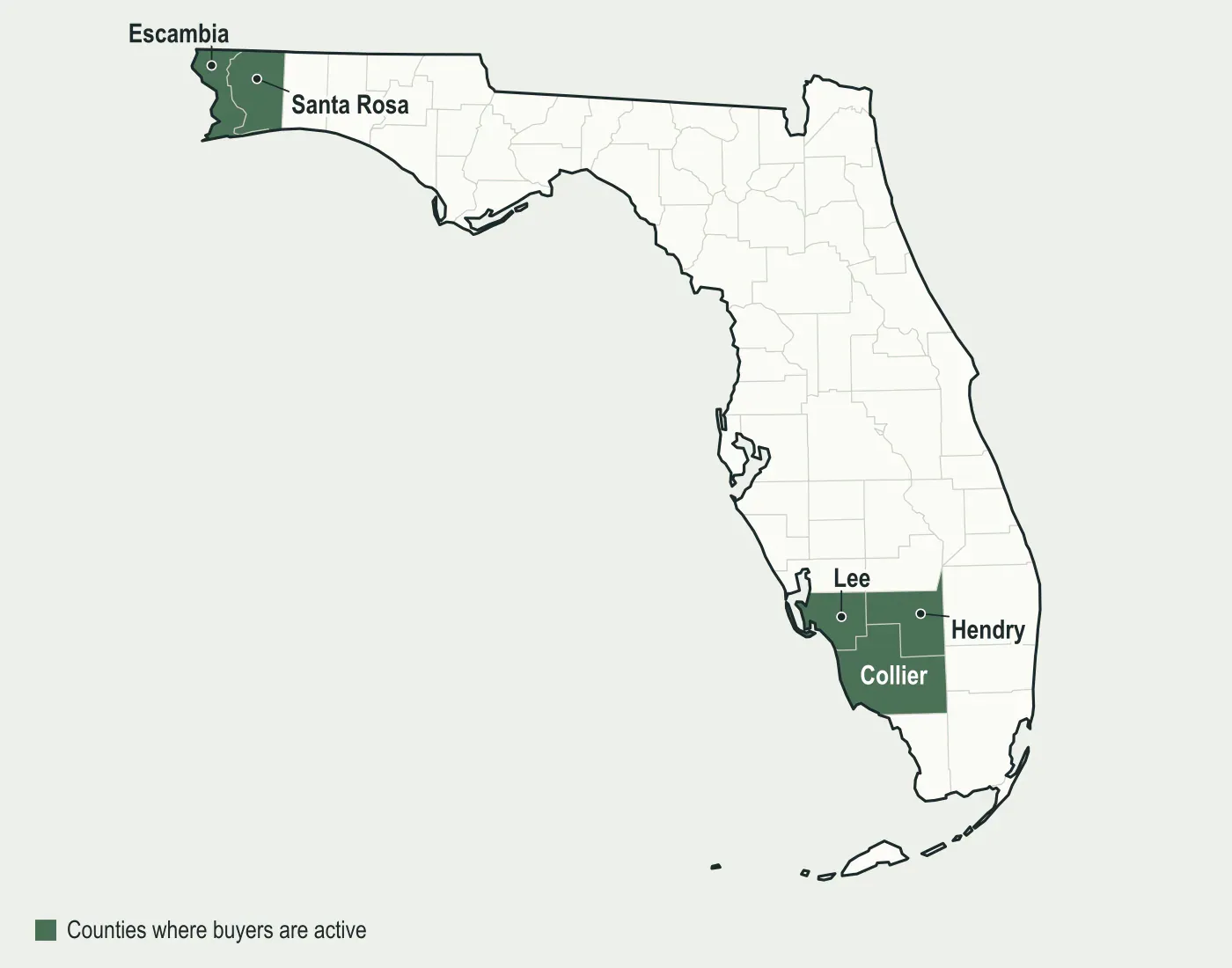
Florida is a thin market, and it is better to say so plainly. The state has minor crude oil reserves, accounts for less than 0.1 percent of U.S. production, and produced 800,000 barrels in 2025 (EIA, 2026). Every producing well sits in one of two small areas: the Jay field area in the western Panhandle, in Santa Rosa and Escambia counties, and the Sunniland trend in southwest Florida, in Collier, Hendry and Lee counties. Outside those counties there are no producing wells, so Florida mineral rights elsewhere have little or no oil and gas value. If you plan to sell mineral rights in Florida, start by checking whether you are in one of those five counties.
Where Florida mineral rights buyers are most active
Florida's oil history is short. Oil was discovered near Naples in 1943, output peaked at nearly 48 million barrels in 1978 with the development of the Jay Field in the Panhandle, and production has been under 3 million barrels a year since 2004 (EIA, 2026). The Jay field is still the largest producer: in the Florida DEP's 2025 well production data it reported about 472,000 barrels across Santa Rosa and Escambia counties, with the nearby Mt Carmel field in Santa Rosa County adding about 59,000 barrels (Florida DEP, 2025).
The Sunniland trend in the south is a string of small conventional fields in Collier, Hendry and Lee counties. In 2025 the West Felda field in Hendry County reported about 101,000 barrels, Raccoon Point in Collier County about 76,000, Bear Island in Collier about 45,000, Corkscrew in Collier about 23,000 and Mid-Felda in Hendry about 7,000, while the Sunniland and Lehigh Park fields reported no production (Florida DEP, 2025). Natural gas is tiny: almost all of it comes from the Jay field, most is reinjected into the oil zones, and only 5 to 15 percent of gross withdrawals are marketed (EIA, 2026). Florida mineral rights buyers therefore price oil royalties, not gas.
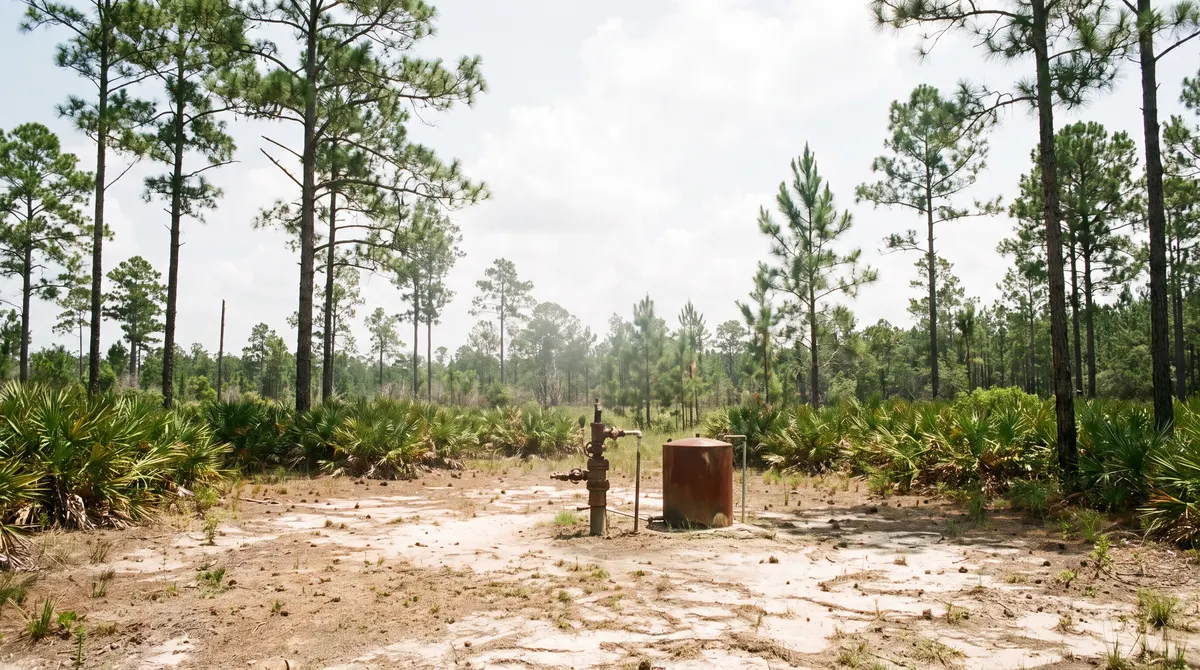
What buyers check before a Florida mineral rights offer
Mineral rights buyers use the Florida Department of Environmental Protection's Oil and Gas Program, part of the Division of Water Resource Management, which permits drilling and production and keeps field offices near the producing fields in the northwest at Jay and in the south at Fort Myers. Its Interactive Map of Permitted Wells, permit database, and well and field production data by year let a buyer confirm your well, the operator and the monthly volumes before pricing Florida mineral rights.
Because the market is small, buyers look hard at the operator and the field's remaining life. Jay is a mature field that drove the state's 1978 production peak (EIA, 2026), and the Sunniland fields produce at low rates. For non-producing Florida mineral rights, a buyer checks whether the tract lies inside or next to a producing field. Drilling in Florida's state waters has been banned since 1989 (EIA, 2026), so offshore acreage has no near-term value to a mineral buyer.
Florida mineral rights records and ownership
The clerk of the circuit court is the recorder of all instruments required or authorized to be recorded in the county (Florida Statutes 28.222), so deeds, mineral deeds and oil and gas leases are recorded with the county clerk's official records. Buyers run title through those records before they price Florida mineral rights.
If you inherited severed minerals, record the probate order or a certified death certificate and affidavit with the clerk so the chain of title reaches you. An oil and gas attorney can confirm what fraction of the minerals you hold under a given tract, which matters because many Florida tracts carry fractional royalty interests rather than full Florida mineral rights.
Selling Florida mineral rights: taxes and closing
Florida's oil production tax is 8 percent of gross value for ordinary oil, 5 percent for small well oil, and a tiered 1 to 9 percent for tertiary and mature field recovery oil depending on price (Florida Statutes 211.02), and the gas production tax starts from a base rate of 17.1 cents per thousand cubic feet adjusted each year (Florida Statutes 211.025). Those taxes are taken before royalties are paid. Ask a tax professional how the sale itself will be taxed and whether a stepped-up basis on inherited mineral rights reduces the gain.
To sell mineral rights in Florida, gather the recorded deed or probate record, any lease and recent royalty statements. Mineral rights buyers verify the well names against DEP production data. Closing is a mineral deed recorded with the county clerk, payment, and a transfer order so the operator pays the new owner. With few buyers in the state, several written mineral rights offers matter more here than anywhere else.
How to get offers for Florida mineral rights
Tell us your county and what you own. We send your request to up to 3 buyers who purchase in that part of Florida. They review the public records and contact you with offers, and you choose whether to sell, sell part, or keep.
Florida mineral rights sources
- U.S. Energy Information Administration, Florida State Profile and Energy Estimates (updated April 2026)
- Florida Department of Environmental Protection, Oil and Gas Program
- Florida Department of Environmental Protection, 2025 Well Production Data
- Florida Statutes 211.02, Oil production tax (FindLaw, current as of January 2025)
- Florida Statutes 28.222, Clerk to be county recorder (FindLaw, current as of January 2025)
- U.S. Geological Survey, Assessment of Undiscovered Oil and Gas Resources in the South Florida Basin, 2016
Last reviewed October 13, 2026. This page is general information, not legal or tax advice. Facts come from the official sources listed above; confirm anything that matters to your sale with a qualified professional.
Where Florida mineral rights buyers are active
Buyers concentrate on the counties below, where drilling is heaviest. Minerals elsewhere in Florida can still sell; send the details and we'll tell you if a buyer covers your area.
What you can sell in Florida
- Mineral rightsProducing or non-producing minerals, all or part of your interest.
- Royalty interestsWant to sell oil and gas royalties? See how buyers value a royalty interest or NPRI, what to have ready, and get offers from up to 3 buyers in your county.
- Overriding royalties (ORRI)Own an overriding royalty interest? Learn how ORRIs work, why lease expiry changes the price, which documents buyers need, and how to get offers.
- Inherited mineral rightsInherited mineral rights or oil and gas royalties? Learn how to get title in your name, why royalties go into suspense, and how to get buyer offers.
Florida mineral rights questions
Do my Florida mineral rights have any value if I am not in a producing county?
Usually very little for oil and gas. Florida's production is limited to the Jay field area in Santa Rosa and Escambia counties and the Sunniland trend in Collier, Hendry and Lee counties (Florida DEP, 2025). Minerals elsewhere may still have value for sand, limestone or phosphate, but that is a different market from the oil and gas buyers on this site.
What are Florida mineral rights in the Jay field worth?
Buyers price a multiple of your recent royalty income, discounted for the field's age and the risk that an old field is shut in when prices fall. Several offers side by side are the only reliable guide for mineral rights in a market this small.
How do I sell mineral rights in Florida through this site?
Send one request with your county, the field or well name if you know it, and a recent royalty statement. Up to three independent buyers active in your county make offers, and you choose one or keep your mineral rights. Owners pay nothing; the buyers pay for the introduction.
Get offers for your Florida mineral rights
Free to you, no obligation. Your details go only to buyers active in your county.
Other states
Sell mineral rights in Texas, Sell mineral rights in Oklahoma, Sell mineral rights in New Mexico, Sell mineral rights in North Dakota, Sell mineral rights in Ohio, Sell mineral rights in Pennsylvania, Sell mineral rights in West Virginia, Sell mineral rights in Colorado, Sell mineral rights in Louisiana, Sell mineral rights in Wyoming, Sell mineral rights in Alabama, Sell mineral rights in Alaska, Sell mineral rights in Arkansas, Sell mineral rights in California, Sell mineral rights in Illinois, Sell mineral rights in Indiana, Sell mineral rights in Kansas, Sell mineral rights in Kentucky, Sell mineral rights in Michigan, Sell mineral rights in Mississippi, Sell mineral rights in Montana, Sell mineral rights in Nebraska, Sell mineral rights in New York, Sell mineral rights in South Dakota, Sell mineral rights in Tennessee, Sell mineral rights in Utah, Sell mineral rights in Virginia