Sell mineral rights in Indiana
Indiana is a small oil state. Its proved crude oil reserves and production are small, the center of production sits in the Illinois Basin in southwestern Indiana, and annual output fell to 1.6 million barrels in 2024, about 0.03 percent of U.S. production (EIA, 2025). Indiana mineral rights still change hands, mostly in a handful of southwest counties where conventional wells and waterfloods keep paying. When you sell mineral rights in Indiana, the buyer is pricing that steady, small income and the state's 20-year mineral lapse law shapes who can sell at all.
Where Indiana mineral rights buyers are most active
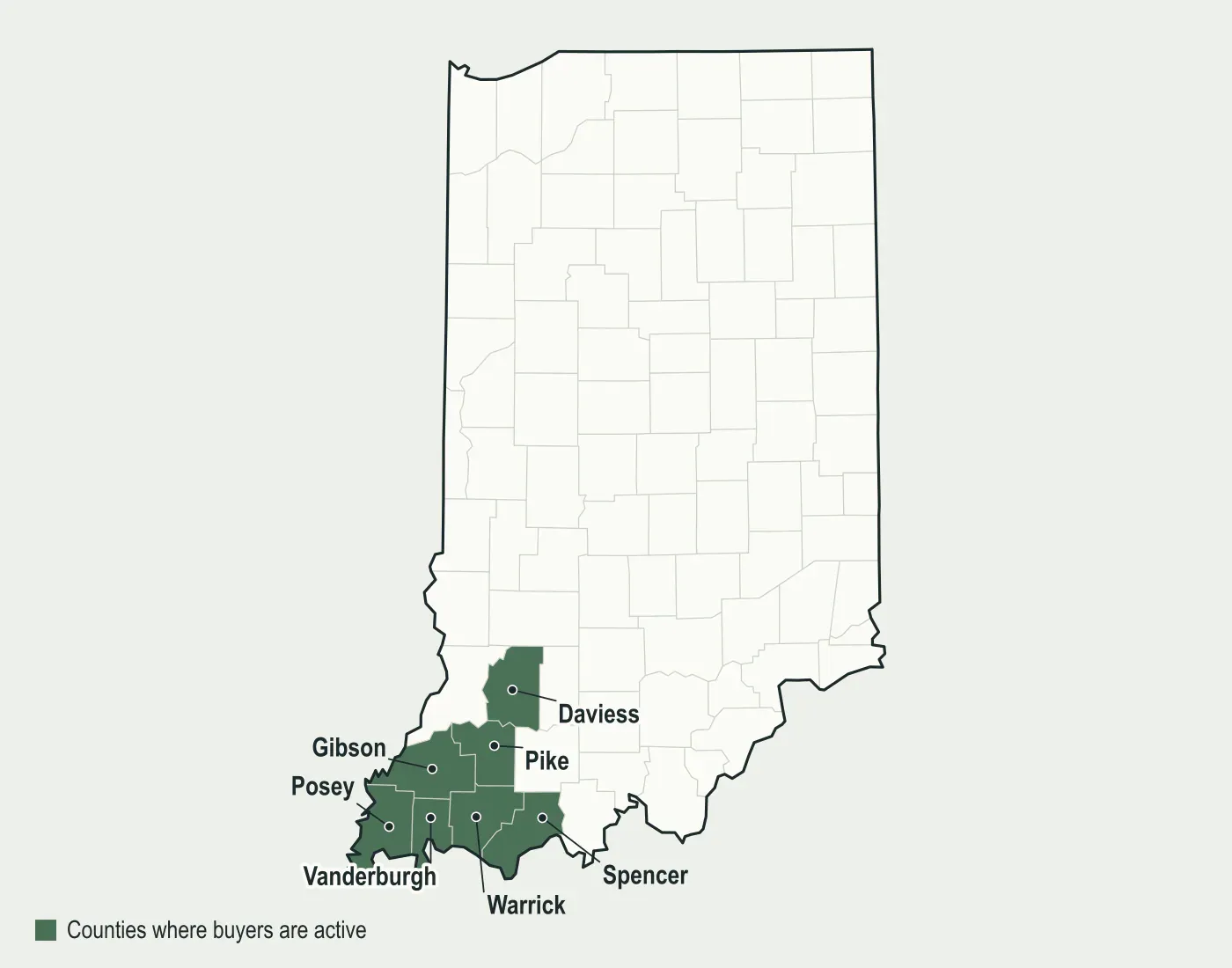
Activity is concentrated in the southwest corner. The Division of Reclamation's monthly oil and gas reports for late 2024 and 2025 list well permits and completions in Gibson, Posey, Vanderburgh, Spencer, Warrick, Pike and Daviess counties, with Gibson and Posey the busiest for new oil wells and enhanced recovery permits (Indiana DNR, 2025). Those are the counties where Indiana mineral rights draw the most offers.
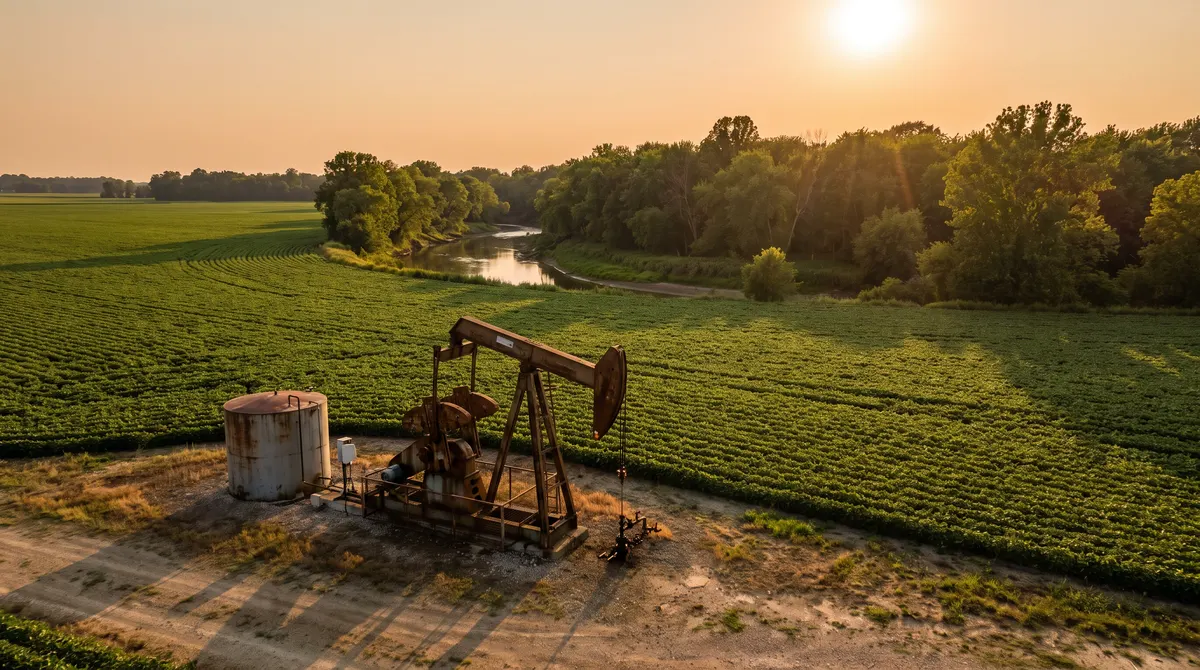
Production is conventional and vertical. Indiana wells are shallow oil wells in old fields, many of them part of waterflood units where operators inject water to push more oil to producing wells. The state produced 1,627,870 barrels of oil and 3.25 billion cubic feet of gas in 2024 (Indiana DNR, 2024), down from a peak of almost 13 million barrels a year in 1956 (EIA, 2025). Natural gas is minor; production peaked at 9.1 billion cubic feet in 2011 and was about 3.8 billion cubic feet in 2023, mainly from east-central Indiana (EIA, 2025).
What buyers check before an Indiana mineral rights offer
Mineral rights buyers start with the Oil and Gas Program of the Indiana DNR Division of Reclamation, which regulates spacing, permitting, drilling, completion, operation and plugging of wells, plus underground injection for enhanced recovery and disposal. Its Well Records Search and map of oil and gas wells show every permitted well, and the Indiana Geological and Water Survey holds the well data buyers map against. A buyer will match your royalty statement to those records before pricing Indiana mineral rights.
For producing interests, buyers weigh the operator, the age of the waterflood and the decline rate. For non-producing Indiana mineral rights they look at distance to active pools and whether a lease is in place. Because the state is small and the wells are shallow, most offers are a multiple of recent royalty income with little drilling upside, and that is the honest picture rather than a buyer's trick.
Indiana mineral rights records and the Mineral Lapse Act
Indiana has one of the strictest dormant mineral laws in the country. Under Indiana Code 32-23-10-2, an interest in coal, oil and gas or other minerals that is unused for 20 years is extinguished, and ownership reverts to the owner of the interest it was carved out of, unless a statement of claim is filed. The interest counts as used when minerals are produced under it, when injection, storage or disposal operations are conducted on it, when rentals or royalties are paid, when any of those happen on a tract pooled or unitized with it, or when the owner pays taxes on the mineral interest (IC 32-23-10-3).
To keep an unused interest alive, the owner files a statement of claim before the 20 years run out, in the office of the recorder of deeds in the county where the land is located, giving the owner's name and address and a description of the land (IC 32-23-10-4). Deeds, mineral deeds and leases for Indiana mineral rights are recorded in that same county recorder's office, so a buyer's title search covers both the chain of title and the 20-year test.
If you inherited severed Indiana mineral rights and no well, lease, royalty or tax payment has touched them in 20 years, see an oil and gas attorney before you ask for offers. The lapse is automatic. A filed statement of claim is cheap insurance for an interest that is still inside the window.
Selling Indiana mineral rights: taxes and closing
Indiana levies a petroleum severance tax on production, the greater of 1 percent of the value of the petroleum or 24 cents per barrel of oil and 3 cents per thousand cubic feet of gas (IC 6-8-1-8), so royalty checks already reflect it. The state individual adjusted gross income tax rate is 2.95 percent for 2026 and drops to 2.90 percent in 2027 (Indiana Department of Revenue), so the gain on a sale is taxed by the state as well as federally. A tax professional can tell you whether a stepped-up basis on inherited mineral rights wipes out most of the gain.
To sell mineral rights in Indiana, gather the recorded deed or probate record, any lease, and recent royalty statements showing the well names and your decimal interest. Buyers check those against DNR records. Closing is a mineral deed recorded with the county recorder, payment, and a transfer order so the operator pays the new owner. Compare several written mineral rights offers against a year of royalty income before you choose.
How to get offers for Indiana mineral rights
Tell us your county and what you own. We send your request to up to 3 buyers who purchase in that part of Indiana. They review the public records and contact you with offers, and you choose whether to sell, sell part, or keep.
Indiana mineral rights sources
- U.S. Energy Information Administration, Indiana State Profile and Energy Estimates (updated November 2025)
- Indiana Department of Natural Resources, Oil & Gas Program (Division of Reclamation)
- Indiana DNR Division of Reclamation, Oil and Gas Section monthly report, December 2024
- Indiana Code 32-23-10-2, Lapse of mineral interest (FindLaw, current as of January 2026)
- Indiana Code 6-8-1-8, Petroleum severance tax rate (FindLaw, current as of January 2026)
- Indiana Department of Revenue, Tax rates, fees and penalties
Last reviewed October 13, 2026. This page is general information, not legal or tax advice. Facts come from the official sources listed above; confirm anything that matters to your sale with a qualified professional.
Where Indiana mineral rights buyers are active
Buyers concentrate on the counties below, where drilling is heaviest. Minerals elsewhere in Indiana can still sell; send the details and we'll tell you if a buyer covers your area.
What you can sell in Indiana
- Mineral rightsProducing or non-producing minerals, all or part of your interest.
- Royalty interestsWant to sell oil and gas royalties? See how buyers value a royalty interest or NPRI, what to have ready, and get offers from up to 3 buyers in your county.
- Overriding royalties (ORRI)Own an overriding royalty interest? Learn how ORRIs work, why lease expiry changes the price, which documents buyers need, and how to get offers.
- Inherited mineral rightsInherited mineral rights or oil and gas royalties? Learn how to get title in your name, why royalties go into suspense, and how to get buyer offers.
Indiana mineral rights questions
Can my inherited Indiana mineral rights have lapsed without anyone telling me?
Yes. Indiana's Mineral Lapse Act extinguishes a severed mineral interest after 20 years without production, operations, rental or royalty payments, tax payments or a filed statement of claim (IC 32-23-10-2). No notice is sent. Check the county recorder's records and your family's royalty and tax history before you try to sell.
What are Indiana mineral rights worth?
For producing interests, buyers usually offer a multiple of recent royalty income, discounted for decline and the operator's size. Non-producing mineral rights far from an active pool draw few offers. Comparing several offers is the only reliable way to see the real range for your Indiana mineral rights.
How do I sell mineral rights in Indiana through this site?
Send one request with your county, the well or lease name if you know it, and a recent royalty statement. Up to three independent buyers active in your county make offers, and you choose one or keep your mineral rights. Owners pay nothing; the buyers pay for the introduction.
Get offers for your Indiana mineral rights
Free to you, no obligation. Your details go only to buyers active in your county.
Other states
Sell mineral rights in Texas, Sell mineral rights in Oklahoma, Sell mineral rights in New Mexico, Sell mineral rights in North Dakota, Sell mineral rights in Ohio, Sell mineral rights in Pennsylvania, Sell mineral rights in West Virginia, Sell mineral rights in Colorado, Sell mineral rights in Louisiana, Sell mineral rights in Wyoming, Sell mineral rights in Alabama, Sell mineral rights in Alaska, Sell mineral rights in Arkansas, Sell mineral rights in California, Sell mineral rights in Florida, Sell mineral rights in Illinois, Sell mineral rights in Kansas, Sell mineral rights in Kentucky, Sell mineral rights in Michigan, Sell mineral rights in Mississippi, Sell mineral rights in Montana, Sell mineral rights in Nebraska, Sell mineral rights in New York, Sell mineral rights in South Dakota, Sell mineral rights in Tennessee, Sell mineral rights in Utah, Sell mineral rights in Virginia