Sell mineral rights in Illinois
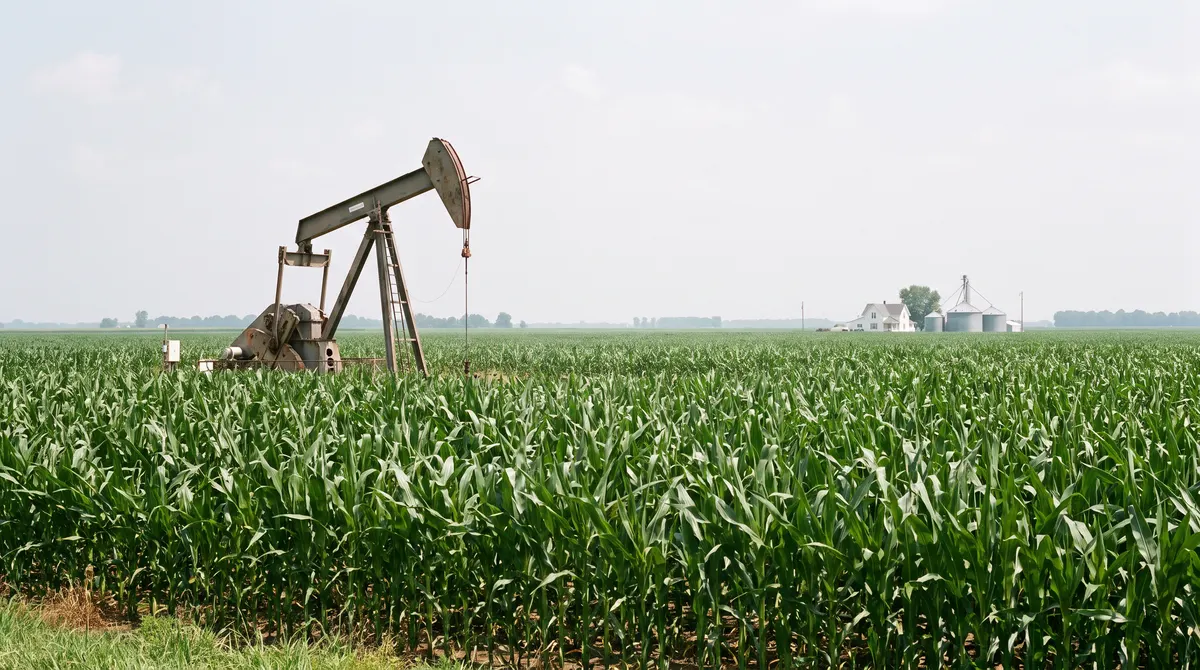
Illinois is a conventional oil state with little natural gas. Most of its producing oil wells are in the Illinois Basin in the southern half of the state, and most of them are stripper wells that average under 2 barrels a day (EIA, 2025). That shapes the market for Illinois mineral rights: buyers price long-lived, low-volume royalty income rather than new drilling. If you plan to sell mineral rights in Illinois, expect offers tied closely to what your wells paid over the last year.
Where Illinois mineral rights buyers are most active
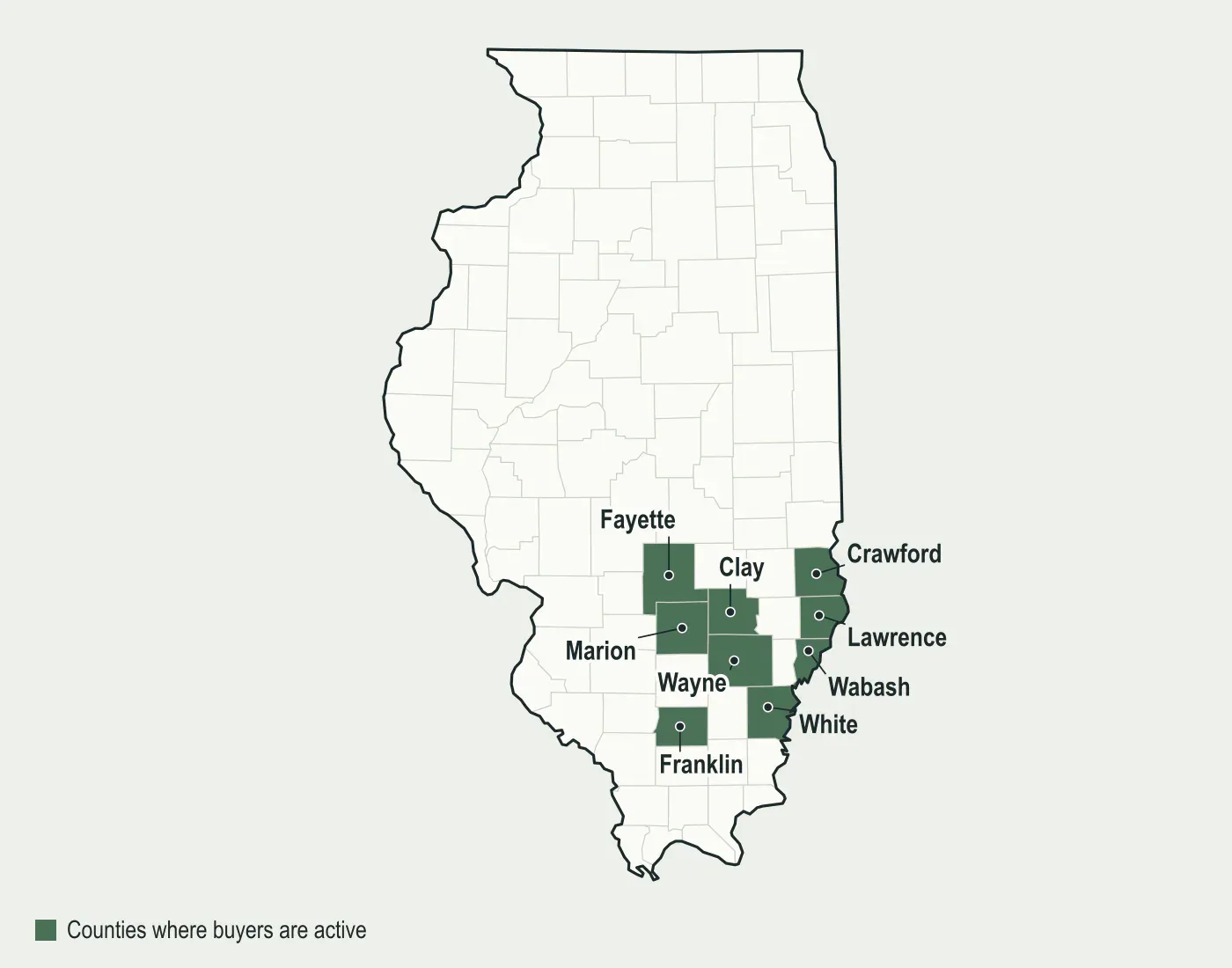
White County is the center of the Illinois oil patch. It produced 2,100,336 barrels in 2025, more than the next four counties combined, out of a state total of 6,774,035 barrels from 43 counties (Illinois Petroleum Resources Board, 2025). Marion (676,772 barrels), Crawford (547,275), Wabash (351,965), Fayette (293,821), Franklin (288,257), Clay (244,337), Wayne (231,247) and Lawrence (226,235) round out the top counties in the same report. Illinois mineral rights in those counties draw the most offers because that is where the wells are.
Statewide output has settled just under 7 million barrels a year from 2022 through 2024, the lowest level since the mid-1930s, down from a 1940 peak of almost 150 million barrels (EIA, 2025). Production dropped again in 2025, by 438,162 barrels (Illinois Petroleum Resources Board, 2025). Mineral rights buyers know these numbers. Their offers assume slow decline, with upside only where an operator is waterflooding or drilling new wells in an old field.
What buyers check before an Illinois mineral rights offer
Mineral rights buyers look up your wells with the Illinois Department of Natural Resources. Its Office of Oil and Gas Resource Management permits wells, runs the underground injection control program and plugs abandoned wells, with a main office in Springfield and district offices in Centralia and Mount Carmel. Permit records, well logs and plugging history come from that office, and buyers map your wells against them.
For producing Illinois mineral rights, the first question is the operator. A small operator with old leases and injection wells to maintain carries more risk than a larger company, so buyers discount accordingly. The second question is your decimal interest and whether the lease is held by production. For non-producing acreage, buyers look at distance to active fields and whether any lease is in force. Non-producing Illinois mineral rights far from a field get few offers, and that is honest pricing rather than a low-ball.
Illinois mineral rights records and the Severed Mineral Interest Act
Deeds, mineral deeds and oil and gas leases are recorded with the county recorder in the county where the land lies, who records every instrument entitled to recording in the order it is received (55 ILCS 5/3-5010). Your chain of title to Illinois mineral rights runs through that office, and a buyer's title check starts there.
Illinois does not have a dormant mineral act in the Indiana or Michigan sense, where an unused interest lapses after 20 years. Its Severed Mineral Interest Act (765 ILCS 515) deals with owners who cannot be found. If a severed mineral interest is held by an unknown or missing owner, the circuit court of the county where the minerals lie can declare a trust, appoint a trustee for the missing owners and authorize that trustee to lease the minerals on court-approved terms. An unknown or missing owner is one whose identity or location cannot be found from county records or by diligent inquiry.
The practical lesson for owners of Illinois mineral rights is to keep your name and current address in the county records. If you inherited an interest and the records still show a grandparent, record the probate or affidavit of heirship so operators and buyers can find you. An oil and gas attorney can do this quickly, and it also keeps royalty checks from going unclaimed.
Selling Illinois mineral rights: taxes, leases and closing
Illinois has a flat individual income tax of 4.95 percent of net income (Illinois Department of Revenue), so the gain on a sale is taxed by the state as well as federally. Ask a tax professional whether your basis in inherited mineral rights reduces that gain. Illinois's hydraulic fracturing tax applies only to oil and gas from wells permitted under the Hydraulic Fracturing Regulatory Act, at 3 percent for the first 24 months and up to 6 percent after that (35 ILCS 450), so it does not touch royalties from conventional stripper wells.
To sell mineral rights in Illinois, have your recorded deed or probate record, any lease, and recent royalty statements ready. Buyers verify the well names and your decimal interest against those statements. Closing is a mineral deed recorded with the county recorder, payment, and a transfer order so the operator pays the new owner. Get several written mineral rights offers and compare them to a year of royalty income before you decide.
How to get offers for Illinois mineral rights
Tell us your county and what you own. We send your request to up to 3 buyers who purchase in that part of Illinois. They review the public records and contact you with offers, and you choose whether to sell, sell part, or keep.
Illinois mineral rights sources
- U.S. Energy Information Administration, Illinois State Profile and Energy Estimates (updated October 2025)
- Illinois Department of Natural Resources, Office of Oil and Gas Resource Management
- Illinois Petroleum Resources Board, 2025 Illinois Oil Production Report
- Illinois Department of Revenue, Income tax rates
- 765 ILCS 515/3, Severed Mineral Interest Act (FindLaw, current as of January 2025)
- 35 ILCS 450/2-15, Illinois Hydraulic Fracturing Tax Act (FindLaw, current as of January 2025)
Last reviewed October 13, 2026. This page is general information, not legal or tax advice. Facts come from the official sources listed above; confirm anything that matters to your sale with a qualified professional.
Where Illinois mineral rights buyers are active
Buyers concentrate on the counties below, where drilling is heaviest. Minerals elsewhere in Illinois can still sell; send the details and we'll tell you if a buyer covers your area.
What you can sell in Illinois
- Mineral rightsProducing or non-producing minerals, all or part of your interest.
- Royalty interestsWant to sell oil and gas royalties? See how buyers value a royalty interest or NPRI, what to have ready, and get offers from up to 3 buyers in your county.
- Overriding royalties (ORRI)Own an overriding royalty interest? Learn how ORRIs work, why lease expiry changes the price, which documents buyers need, and how to get offers.
- Inherited mineral rightsInherited mineral rights or oil and gas royalties? Learn how to get title in your name, why royalties go into suspense, and how to get buyer offers.
Illinois mineral rights questions
What are Illinois mineral rights under stripper wells worth?
Buyers usually offer a multiple of your recent royalty income, discounted for decline and for the operator's size. Most Illinois wells average under 2 barrels a day (EIA, 2025), so the income is small but steady. Several offers side by side will show you the realistic range for your mineral rights.
Can I lose inherited Illinois mineral rights if nobody has used them?
Not by a fixed-year lapse. Illinois's Severed Mineral Interest Act lets a court lease the minerals of an unknown or missing owner through a trustee, so the risk is being unfindable rather than inactive. Record your current name and address with the county recorder and you are not a missing owner.
How do I sell mineral rights in Illinois through this site?
Fill in one request with your county, the well or lease name if you know it, and a recent royalty statement. Up to three independent buyers active in your county review it and make offers. You compare them and choose, or keep your mineral rights. Owners pay nothing; the buyers pay for the introduction.
Get offers for your Illinois mineral rights
Free to you, no obligation. Your details go only to buyers active in your county.
Other states
Sell mineral rights in Texas, Sell mineral rights in Oklahoma, Sell mineral rights in New Mexico, Sell mineral rights in North Dakota, Sell mineral rights in Ohio, Sell mineral rights in Pennsylvania, Sell mineral rights in West Virginia, Sell mineral rights in Colorado, Sell mineral rights in Louisiana, Sell mineral rights in Wyoming, Sell mineral rights in Alabama, Sell mineral rights in Alaska, Sell mineral rights in Arkansas, Sell mineral rights in California, Sell mineral rights in Florida, Sell mineral rights in Indiana, Sell mineral rights in Kansas, Sell mineral rights in Kentucky, Sell mineral rights in Michigan, Sell mineral rights in Mississippi, Sell mineral rights in Montana, Sell mineral rights in Nebraska, Sell mineral rights in New York, Sell mineral rights in South Dakota, Sell mineral rights in Tennessee, Sell mineral rights in Utah, Sell mineral rights in Virginia