Sell mineral rights in California
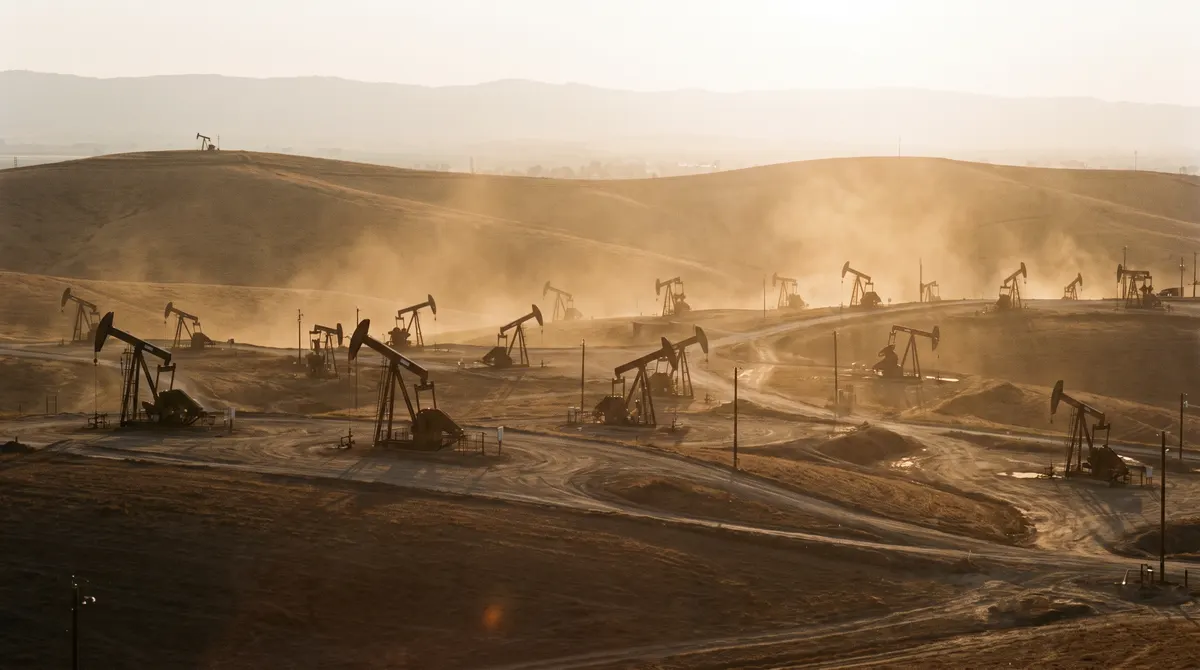
California is still a large oil producer, and most of it comes from one county. Kern County produced 89.7 million of the state's 123.2 million barrels of oil and condensate in 2023 (CalGEM, 2023). The market for California mineral rights follows that map: steady demand in the San Joaquin Basin, a smaller but real market in the Los Angeles and Ventura basins, and modest interest in the gas fields of the Sacramento Valley. State policy limits new drilling in some places, which changes how buyers price offers. If you want to sell mineral rights in California, this page covers where buyers are active, what they check and what the rules mean for you.
Where buyers are most active in California
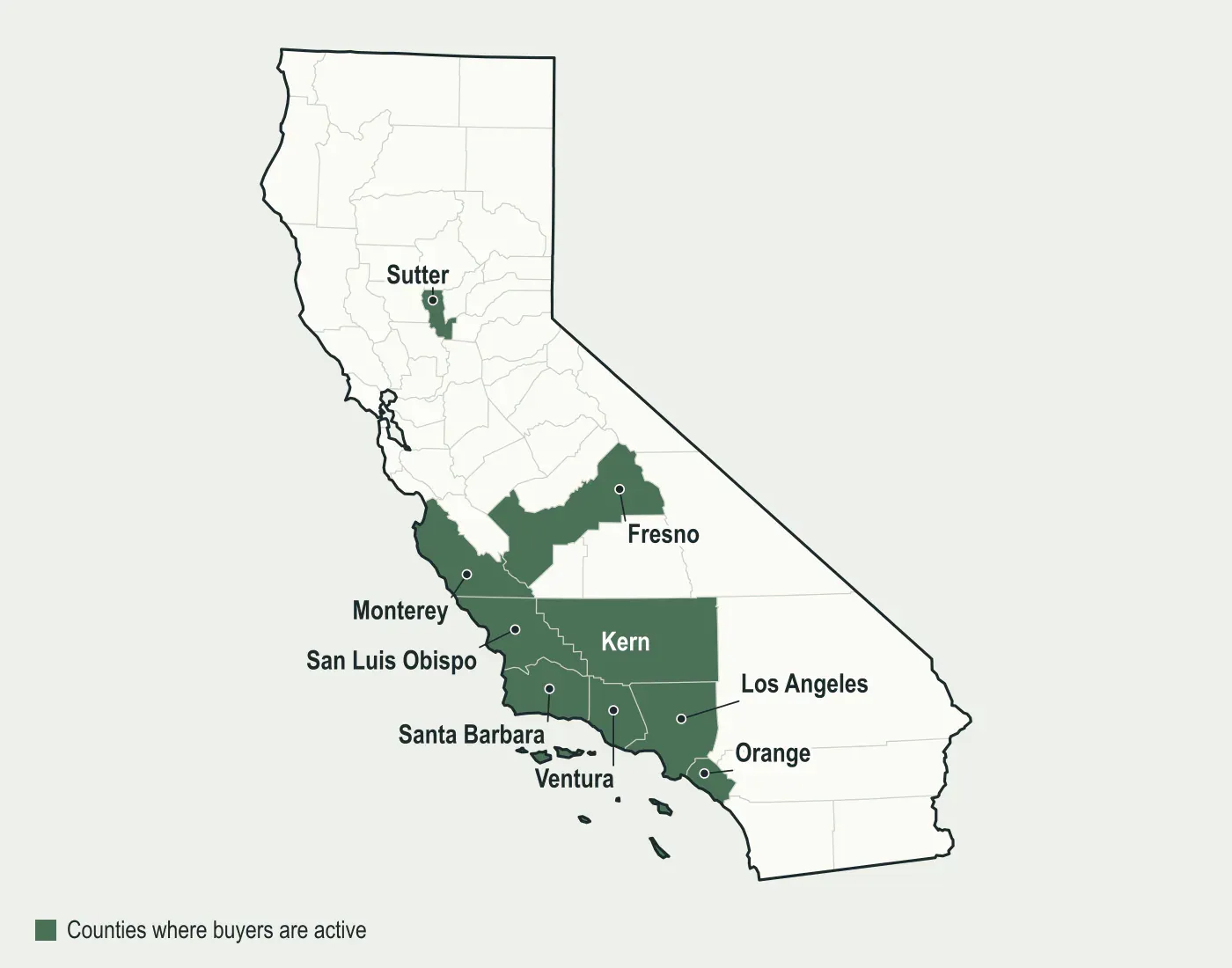
Kern County is the center of the California mineral rights market. Its San Joaquin Basin fields produced about 73% of the state's oil and 79% of its gas in 2023 (CalGEM, 2023), and the Bureau of Land Management notes that four of the nation's top seven producing oil fields sit in the county. Fresno County, to the north in the same basin, produced 5.1 million barrels. These are mature fields worked with conventional and steam-assisted wells rather than horizontal shale wells, so royalties tend to be steady rather than fast-growing.
The Los Angeles Basin is the second market. Los Angeles County produced 8.7 million barrels onshore and a further 4.8 million offshore in 2023, and Orange County 2.2 million (CalGEM, 2023). Ventura County produced 4.9 million barrels, Monterey County 4.1 million, Santa Barbara County 2.4 million and San Luis Obispo County about 575,000. Mineral rights under urban fields come with more regulatory risk than rural acreage, and buyers price that in.
The Sacramento Basin is gas country. Sutter, Sacramento, Glenn, Colusa and Solano counties each produced between 1.0 and 2.6 million mcf of gas in 2023 with little or no oil (CalGEM, 2023). Statewide crude output was 105.2 million barrels in 2025 (EIA, 2025), continuing a long decline. Gas-only mineral rights here get offers, but they are small.
What buyers check before a California mineral rights offer
Buyers start with CalGEM, the division of the Department of Conservation that regulates oil, gas and geothermal operations. Its Well Finder map shows every well with its status and history, and WellSTAR holds the permit and production records. Any buyer can see which wells sit on your tract, whether they are active, idle or plugged, and what the field has produced. Idle wells matter: a field full of them tells a buyer the operator may not drill again.
Drilling policy is the second check, and California is unusual here. Senate Bill 1137 created a 3,200-foot health protection zone around homes, schools and hospitals, and since June 28, 2024 CalGEM has not approved new well permits inside those zones (CalGEM). Senate Bill 237, enacted in 2025, allows CalGEM to approve up to 2,000 new well permits a year in Kern County under the county's environmental review through 2036 (CalGEM). Mineral rights in rural Kern County have a drilling outlook; minerals under a Los Angeles neighborhood mostly do not.
Ownership is the third. Federal production is about 8% to 10% of the state total, and more than 95% of federal drilling is in Kern County (BLM). Most California mineral rights in producing areas are privately owned, so buyers verify your net mineral acres and decimal interest against recorded deeds and the operator's division order.
California mineral rights records and ownership
Mineral deeds, royalty deeds and leases are recorded with the county recorder where the land lies, and a buyer traces title from the last recorded deed to you. Inherited California mineral rights often sit in a grandparent's name; the buyer will ask for the probate order or affidavit that connects you to that owner.
California has a dormant mineral rights law that owners of non-producing minerals need to know. Under Civil Code section 883.220, a mineral right is dormant if, for the 20 years before a termination action is filed, there has been no production or exploration, no separate property tax assessment paid on it, and no recorded instrument creating, reserving or transferring it. The owner can protect the interest at any time by recording a notice of intent to preserve the mineral right (Civil Code section 883.230). If your family has held unleased California mineral rights for decades without recording anything, record that notice before you sell or hold.
Producing mineral rights are valued on months of royalty income and the field's drilling outlook. Non-producing mineral rights are valued on net mineral acres and whether any operator could still permit a well there. Your royalty statements and division order are the quickest proof of what you own.
Selling California mineral rights: leases, closing and taxes
Closing means recording a mineral or royalty deed with the county recorder. An existing lease stays in force and the buyer steps into your royalty. Unleased acreage passes with the right to lease, though in California that right is worth less where new permits are restricted.
California taxes personal income (Franchise Tax Board, 2025 tax year), and the gain on a sale is taxable. Ask a tax professional how a lump sum compares with continuing royalty income taxed as ordinary income, and whether a stepped-up basis applies to inherited mineral rights.
To sell mineral rights in California through this site, tell us the county, the field or well name if you know it, and your most recent royalty amount. We pass it to up to three independent buyers active in that county. They make offers, you compare, and you can accept one or keep your mineral rights. You pay nothing.
How to get offers for California mineral rights
Tell us your county and what you own. We send your request to up to 3 buyers who purchase in that part of California. They review the public records and contact you with offers, and you choose whether to sell, sell part, or keep.
California mineral rights sources
- California Geologic Energy Management Division (CalGEM)
- CalGEM, 2023 State Oil and Gas Supervisor Annual Report (production by county)
- CalGEM, Senate Bill 1137 health protection zones
- CalGEM, Senate Bill 237
- California Civil Code section 883.220, dormant mineral rights
- Bureau of Land Management, oil and gas in California
Last reviewed October 13, 2026. This page is general information, not legal or tax advice. Facts come from the official sources listed above; confirm anything that matters to your sale with a qualified professional.
Where California mineral rights buyers are active
Buyers concentrate on the counties below, where drilling is heaviest. Minerals elsewhere in California can still sell; send the details and we'll tell you if a buyer covers your area.
California basins and plays
Buyers price California mineral rights by the basin they sit in. These pages cover the counties, formations and drilling outlook of each play that reaches into California.
What you can sell in California
- Mineral rightsProducing or non-producing minerals, all or part of your interest.
- Royalty interestsWant to sell oil and gas royalties? See how buyers value a royalty interest or NPRI, what to have ready, and get offers from up to 3 buyers in your county.
- Overriding royalties (ORRI)Own an overriding royalty interest? Learn how ORRIs work, why lease expiry changes the price, which documents buyers need, and how to get offers.
- Inherited mineral rightsInherited mineral rights or oil and gas royalties? Learn how to get title in your name, why royalties go into suspense, and how to get buyer offers.
California mineral rights questions
Do buyers still want California mineral rights given the state's drilling limits?
Yes, especially producing royalties in Kern County, where permits continue under Senate Bill 237. Interest is weaker for non-producing mineral rights inside a 3,200-foot health protection zone, because no new wells can be permitted there.
How do I find out which wells are on my California minerals?
Open CalGEM's Well Finder map, zoom to your tract and click each well for its status, operator and history. Your royalty statement names the wells or lease, which makes the search faster.
How long does it take to sell mineral rights in California?
Offers usually come back within a few days. Closing takes a few weeks when the deed is in your name, longer when probate or an affidavit of heirship is needed. Buyers of California mineral rights handle most of the paperwork.
Get offers for your California mineral rights
Free to you, no obligation. Your details go only to buyers active in your county.
Other states
Sell mineral rights in Texas, Sell mineral rights in Oklahoma, Sell mineral rights in New Mexico, Sell mineral rights in North Dakota, Sell mineral rights in Ohio, Sell mineral rights in Pennsylvania, Sell mineral rights in West Virginia, Sell mineral rights in Colorado, Sell mineral rights in Louisiana, Sell mineral rights in Wyoming, Sell mineral rights in Alabama, Sell mineral rights in Alaska, Sell mineral rights in Arkansas, Sell mineral rights in Florida, Sell mineral rights in Illinois, Sell mineral rights in Indiana, Sell mineral rights in Kansas, Sell mineral rights in Kentucky, Sell mineral rights in Michigan, Sell mineral rights in Mississippi, Sell mineral rights in Montana, Sell mineral rights in Nebraska, Sell mineral rights in New York, Sell mineral rights in South Dakota, Sell mineral rights in Tennessee, Sell mineral rights in Utah, Sell mineral rights in Virginia